
Geneva – UN Human Rights Council
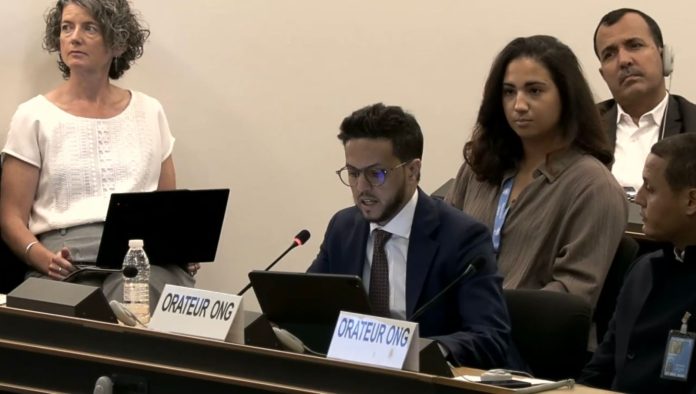
Within the framework of the interactive dialogue with the UN Special Rapporteur on the human rights of migrants, held during the 62nd session of the Human Rights Council in Geneva, Mr. Abdellah Boufouss, speaking on behalf of civil society in the Southern Provinces of the Kingdom of Morocco, called for the strengthening of international efforts aimed at protecting migrants’ rights and ensuring respect for their human dignity.
During his intervention, Mr. Boufouss praised the work carried out by the Special Rapporteur and the efforts of UN mechanisms to promote migrants’ rights and address the challenges and violations faced by thousands of individuals along migration routes across various regions of the world.
The representative of Sahrawi civil society expressed concern over frequent reports indicating that migrants from sub-Saharan Africa are subjected to violations affecting their basic rights in certain parts of North Africa. This includes collective expulsions to desert border areas, arbitrary detentions, mistreatment, and difficulties in accessing international protection mechanisms.
Mr. Boufouss emphasized that human dignity must remain at the heart of migration policies, and that migrants, regardless of their administrative status, deserve the protection and guarantees enshrined in international human rights law.
Furthermore, he highlighted the Moroccan experience in managing migration issues, showcasing the positive results achieved by the National Strategy on Immigration and Asylum. This strategy has enabled the regularization of the legal status of thousands of migrants and enhanced their access to healthcare services, education, vocational training programs, and socio-economic integration opportunities.
In this context, the speaker drew attention to the efforts made in the Kingdom’s Southern Provinces, particularly in the cities of Laâyoune and Dakhla. In these cities, migrants benefit from social support programs, healthcare, and education, alongside integration initiatives implemented through partnerships between public authorities, international organizations, and civil society actors.
Mr. Boufouss explained that these initiatives reflect the Kingdom of Morocco’s commitment to a humane and solidarity-based approach to managing migration issues, in line with its international obligations and the founding principles of the Global Compact for Safe, Orderly and Regular Migration.
Concluding his address, the civil society representative from Morocco’s Southern Provinces called on all states to:
- Strengthen cooperation with UN mechanisms.
- Respect the principle of non-refoulement.
- Ensure effective access to international protection procedures.
- Adopt migration policies rooted in human rights, solidarity, and shared responsibility.
This intervention served as an opportunity to highlight the contribution of civil society organizations in the Kingdom’s Southern Provinces to fostering a culture of human rights and coexistence. It also reaffirmed the role these provinces play as a space for welcoming, integration, and human solidarity.