Prominent literary and intellectual figures gather in Algiers, transforming the fair’s pavilions into a journey between historical memory and future inquiries.
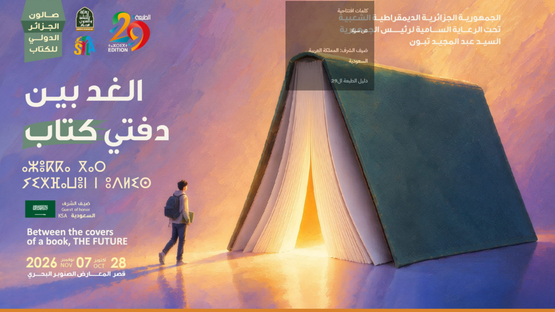
The 29th edition of the Algiers International Book Fair (SILA) welcomed visitors on Thursday at the Pins Maritimes Exhibition Center in the capital, recording notable attendance from the early hours. The event stands as one of the most prominent annual fixtures for publishing and reading enthusiasts in Algeria.
Held under the theme “Tomorrow in a Book,” this year’s edition features 1,567 publishing houses representing 51 countries, presenting nearly 300,000 titles spanning literature, philosophy, history, and science. The Kingdom of Saudi Arabia is taking part as the Guest of Honor, with a presence highlighting its culture, heritage, and literary and intellectual output.
The fair’s appeal extends beyond book counts and publisher numbers, drawing renowned names in literature, thought, and history. Among the notable attendees are Syrian poet Adonis, Algerian novelist Yasmina Khadra, French historian Benjamin Stora, and American historian John Kiser, alongside writers and intellectuals from Algeria, the Arab world, Africa, Europe, and the United States.
The cultural program comprises nearly 994 events, including intellectual seminars, literary gatherings, poetry evenings, and discussions focusing on the novel, national memory, identity, and translation. Emerging talent receives dedicated recognition through the “My First Book” prize aimed at young writers, as well as the launch of a new translation award honoring Algerian translators.
Among this year’s key highlights is a dedicated interactive zone for history and memory utilizing 3D projection technology. The immersive experience aims to present key milestones of Algerian history—from ancient times to the era of Emir Abdelkader—through visual storytelling that goes beyond traditional displays of books and documents.
The Arab and African dimensions feature prominently in this edition through the Saudi pavilion and the “Spirit of PanAF” space dedicated to African literature and thought, alongside other cultural venues fostering dialogue across diverse literary traditions. Meanwhile, the Palestine pavilion continues to draw significant visitor attention, reflecting the cultural presence of the Palestinian cause within the exhibition.